What Age Do You Need a Fishing License?
It can be incredibly confusing trying to figure out all the rules and regulations when you're just trying to enjoy a simple day out on the water, especially when kids are involved. One of the biggest head-scratchers for many parents and guardians is knowing exactly what age a person needs a fishing license in Indiana. This comprehensive guide will break down Indiana's specific age requirements, clear up common misconceptions, and help ensure your next family fishing trip is perfectly legal and stress-free.
The Foundation: Indiana's Youth Fishing License Exemptions
Let's cut right to the chase because this is the core of the matter: Indiana has a very clear and welcoming policy for its younger anglers. The state wants to encourage kids to get outdoors, learn about conservation, and fall in love with fishing. To do this, they've removed a significant barrier.
No License Needed for Young Anglers Under 18
That's right! In Indiana, if you are under the age of 18, you do not need a fishing license. This applies whether you're a resident of the Hoosier State or just visiting. This rule is a fantastic boon for families, youth groups, and anyone introducing a young person to the joys of casting a line. Imagine you're planning a trip to a beautiful spot like Lake Monroe or maybe a quiet local pond; if your child, grandchild, niece, or nephew is 17 years old or younger, they can fish to their heart's content without needing to buy any permit. This makes planning much simpler and certainly helps budget-conscious families enjoy more time together outdoors. You don't have to worry about the hassle or cost of an extra license for them.
This exemption covers all forms of fishing, whether they're trying to catch bluegill with a worm and bobber, attempting to land a bass with a spinnerbait, or even going after bigger fish. The state's goal is to make it as easy as possible for kids to participate, and this age cutoff is a testament to that commitment. It's truly a straightforward rule: if they haven't celebrated their 18th birthday yet, they're good to go.
Why This Exemption Matters for Families
This "kids fish free" policy isn't just a minor detail; it's a fundamental aspect of Indiana's approach to outdoor recreation and conservation for future generations. For many families, the cost of multiple fishing licenses can add up, especially if you have several children. By exempting those under 18, the Indiana Department of Natural Resources (IDNR) effectively lowers the barrier to entry, making fishing more accessible.
Think about it: a family of four, with two kids under 18, only needs to purchase licenses for the adults. This means more money for bait, snacks, or even a new fishing rod for a budding angler. It fosters a sense of inclusivity, allowing every member of the family to participate equally in the fishing experience. It's about creating positive early experiences that can lead to a lifelong passion for the outdoors. It also implicitly teaches young people that while they don't need a license yet, the adults they fish with do, subtly introducing the concept of responsible resource management and funding for conservation efforts through license fees. For more details on what's required generally, you might find our guide on Indiana Fishing License Requirements Explained helpful.
Navigating the "Under 18" Rule in Practical Scenarios
While the rule itself is simple, understanding its practical application, especially around that 18th birthday, is crucial. It's not uncommon for anglers to assume certain things that might not be entirely accurate, leading to potential headaches down the line.
When a Young Adult Transitions to Needing a License
The moment an individual turns 18 years old, they are officially considered an adult in the eyes of Indiana's fishing regulations. This means that, starting on their 18th birthday, they are required to possess a valid Indiana fishing license to legally fish in public waters. There's no grace period, no "almost 18" status. So, if you have a child who's been fishing license-free for years, mark their 18th birthday on your calendar as the day they'll need their own permit.
This transition is important to communicate, especially to young adults who might be accustomed to never needing one. Imagine a scenario where a group of friends, all 17, goes fishing throughout the summer. Then, one of them turns 18 in August. From that point on, that specific friend needs a license, while their 17-year-old buddies can continue to fish without one. It’s a clear line in the sand, and being aware of it ensures everyone stays compliant. Whether they're fishing for largemouth bass in a local lake or trying their hand at trout in a stocked stream, the age requirement is paramount.
The Role of Accompanying Adults
This is perhaps the most common point of confusion: "If my child doesn't need a license, do I, as their parent or guardian, still need one if I'm just helping them?" The answer is a resounding yes! If you are 18 years of age or older and actively participating in fishing, even if your primary goal is to assist a child, you must have your own valid Indiana fishing license.
"Actively participating" means you have a line in the water, you're holding a rod, or you're otherwise engaged in the act of fishing. You can, of course, supervise your child without a license, but if you're demonstrating techniques, baiting hooks and then letting the child cast, or setting out a line yourself, you need to be licensed. The law is designed to ensure that those who are old enough to contribute to conservation efforts through license fees do so.
This is a scenario where people often get caught off guard. Picture a grandparent taking their 10-year-old grandchild fishing. The grandparent might think, "I'm just here to help the little one, I won't really be fishing." But then they grab a rod to show the child how to cast, or perhaps they tie on a new lure, make a cast, and hand the rod back. In the eyes of a conservation officer, that's fishing, and if the adult is 18 or older, a license is required. It's always better to be safe than sorry and purchase your own license before heading out. Our guide on How to Get an Indiana Fishing License can walk you through the process.
| Age Group | General Fishing License Required | Indiana Trout & Salmon Stamp Required (if fishing for trout/salmon) |
|---|---|---|
| Under 18 | No | No |
| 18 and Over | Yes | Yes |
Exploring Exceptions and Special Circumstances
While the general rule for under-18 anglers is quite consistent, there are always unique situations and exceptions that add nuance to the regulations. Understanding these can save you a lot of guesswork and ensure you're always on the right side of the law.
Indiana's Free Fishing Days
Indiana generously offers several designated "Free Fishing Days" each year. These are fantastic opportunities because on these specific days, everyone, regardless of age or residency, can fish in Indiana's public waters without needing a fishing license or a trout/salmon stamp. These days are usually spread throughout the warmer months, often in May, June, and September, to encourage broader participation and introduce new people to the sport.
These days are perfect for families where adults might not have annual licenses but want to enjoy a day on the water with their kids. It's a risk-free way to try out fishing without any financial commitment for permits. It's also an excellent time for those 18 years or older who are new to the state or new to fishing to experience it before committing to purchasing a full license. However, it's crucial to remember that while the license requirement is waived, all other fishing regulations – such as bag limits, length limits, and gear restrictions – still apply. You can find out more about these special opportunities in our guide on Indiana Free Fishing Days Guide.
For example, if you're fishing on a Free Fishing Day and you land a walleye, you still need to know the Indiana Walleye Length Limits by Lake to ensure you're keeping legal-sized fish. It's all about responsible angling, even when the license itself isn't required.
Fishing on Private Ponds and Enclosed Property
Another common question revolves around fishing on private property. Generally, if you are fishing in a private pond or lake that is entirely enclosed within your own private property, and that body of water does not have any inlet or outlet connecting it to public waters, you or your guests (regardless of age) are usually exempt from needing a state fishing license. The key here is "entirely enclosed" and "private property."
However, if that pond or lake is connected to a public waterway, or if it's on property you don't own, even if it feels "private" (like a community pond within a subdivision), then state regulations, including licensing requirements for those 18 and older, typically apply. Always check with the property owner or local ordinances if you're unsure. When in doubt, especially if you're not the sole owner of the land surrounding the water, it's always safest for adults to have a license.
The Nuance of the Trout and Salmon Stamp
For adults aged 18 and over who plan to fish for specific species like trout or salmon in designated waters, an additional permit called the Indiana Trout and Salmon Stamp is often required, on top of their general fishing license. This stamp helps fund specific conservation efforts for these species.
Here's the good news for younger anglers: just like the general fishing license, if you are under 18, you do not need an Indiana Trout and Salmon Stamp, even if you are specifically targeting these species in waters where a stamp would otherwise be required for an adult. This again reinforces Indiana's commitment to making fishing accessible for youth. So, if your teen wants to try their hand at the fall salmon run in one of Lake Michigan's tributaries or head to a put-and-take trout stream, they can do so without an extra stamp until they turn 18. This is a common point of confusion, and understanding that the "under 18" exemption extends to the stamp is super helpful for families. You can learn more about this stamp's specifics in our article titled Indiana Trout and Salmon Stamp Requirements.
Ensuring Compliance and Staying Informed
Understanding the age requirements for an Indiana fishing license is a critical step toward becoming a responsible angler. Taking the time to be well-informed protects you, your family, and the precious natural resources we all enjoy.
The Importance of Knowing the Rules
Ignorance of the law is generally not an acceptable excuse, especially when it comes to wildlife regulations. Conservation officers are out on the water and in the field to protect Indiana's natural heritage and enforce these rules. Their job is to ensure fair chase, sustainable practices, and that those who benefit from the resources contribute to their upkeep. A simple check of the rules beforehand can save you from an uncomfortable encounter and potential legal issues.
It’s always a good habit to review the current year’s Indiana Fishing Regulations Guide, which is available online through the IDNR website or at most license vendors. These guides often include helpful summaries, maps, and specific rules that might vary by lake or river system. Staying informed shows respect for the environment and for the efforts of those who work tirelessly to maintain our fishing opportunities.
Potential Penalties for Fishing Without a License
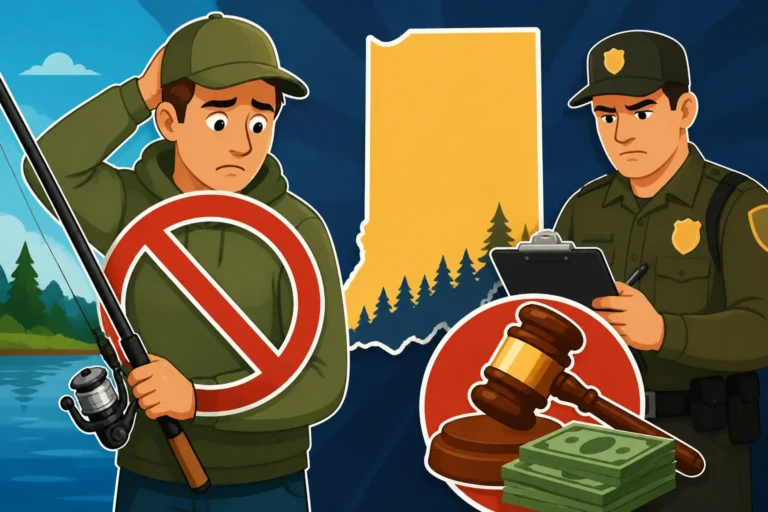
For adults aged 18 and over, fishing without a required license in Indiana is a violation that can carry significant penalties. While the exact fine can vary depending on the county, the judge, and whether it's a first offense or a repeat violation, you're generally looking at a financial penalty. Beyond the monetary cost, there can also be court fees, and in some cases, your fishing privileges could be suspended for a period of time.
Imagine the frustration of having a perfect day on the water, only to have it ruined by a citation that could have been easily avoided with a $23 annual resident license. It's simply not worth the risk. Making sure every adult in your fishing party has their current license is a small step that prevents a large headache. Our article on Penalties and Fines for Fishing Without a License delves deeper into what you might face if caught without the proper documentation. Remember, buying a license is quick and easy, often available online, saving you potential stress and cost down the line. You can even renew your Indiana Fishing License Year Explained through official channels.
Disclaimer
The information provided in this guide is intended for general informational purposes only and does not constitute legal advice. Fishing regulations are subject to change. Always refer to the most current Indiana Department of Natural Resources (IDNR) fishing regulations and consult with official sources for precise and up-to-date information before engaging in any fishing activities.