Best Muskie Lakes in Indiana’s Glacial Lake District
Trying to track down Indiana's legendary "fish of a thousand casts" can feel like an endless quest, leaving many anglers frustrated by empty hours on the water. It’s no secret that muskie are notoriously elusive, but knowing where to focus your efforts dramatically shifts the odds in your favor. This comprehensive guide is here to unravel the mystery, leading you straight to the best muskie lakes nestled within Indiana’s unique Glacial Lake District, giving you the insider knowledge you need for a truly memorable pursuit.
Understanding Indiana's Glacial Lake District for Muskie
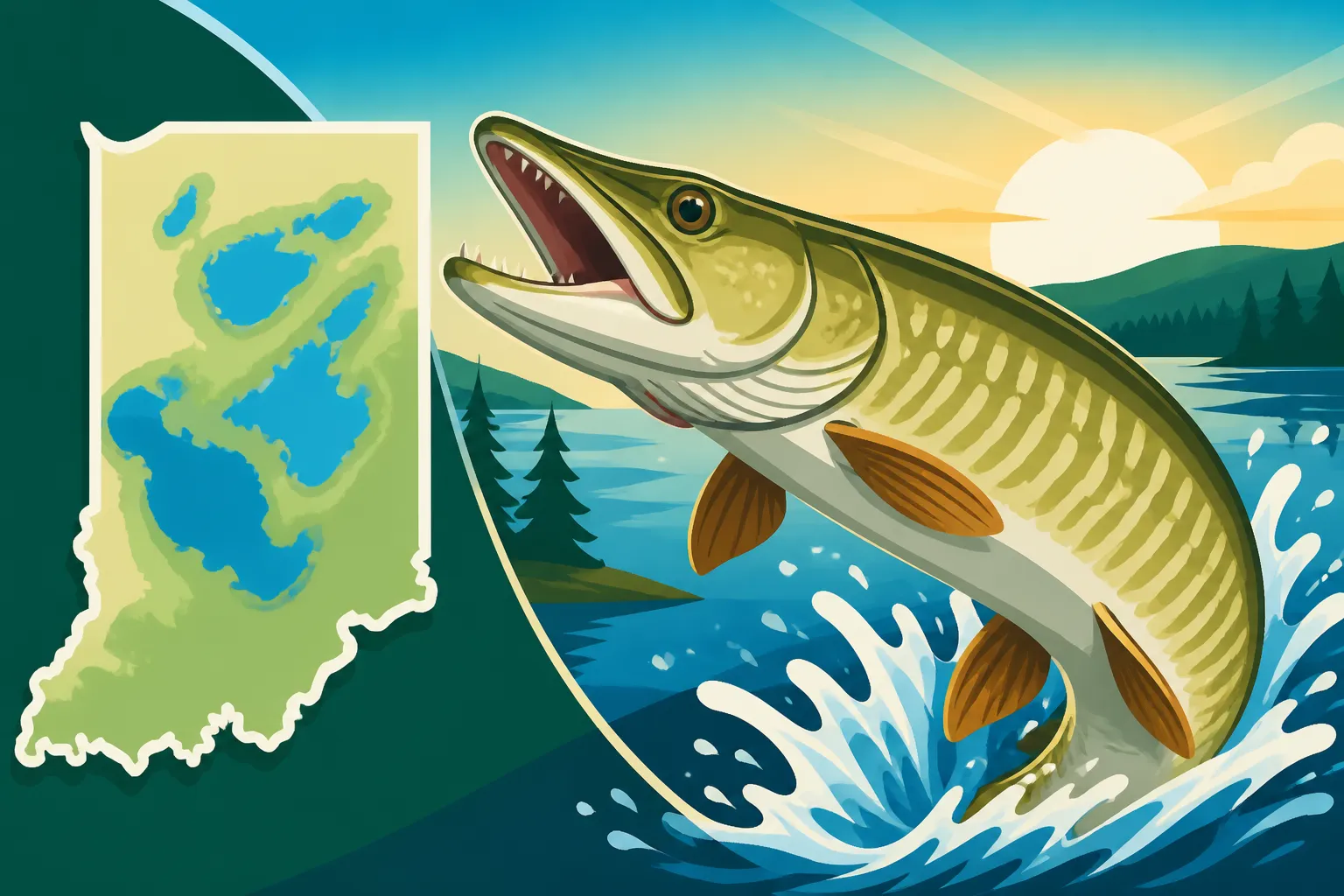
The Glacial Lake District, located primarily in northeastern Indiana, isn't just a pretty collection of water; it's a topographical masterpiece forged by retreating glaciers thousands of years ago. This ancient geological activity carved out deep basins, created intricate underwater structures, and left behind a network of fertile lakes that are absolutely prime habitat for muskellunge. If you're serious about muskie fishing in Indiana, this is where you need to be.
Why Glacial Lakes are Muskie Havens
When those massive ice sheets retreated, they didn't just leave holes in the ground; they sculpted an ecosystem perfectly suited for apex predators like muskie. These lakes tend to be deeper than many other Indiana waters, often featuring abrupt drop-offs, complex bottom contours, and clear water. This provides muskie with ideal ambush points and thermal refuge during warmer months. It's not just about depth, though; the clarity of the water in many of these lakes allows muskie, which are primarily sight feeders, to spot their prey from a distance.
Beyond the physical structure, the rich glacial soil runoff has historically fueled a robust forage base, including species like cisco (also known as lake herring) and various perch and suckers. These fatty, protein-rich prey fish allow muskie to grow to impressive sizes, sometimes pushing well over the 50-inch mark, making them true trophies. Without this abundance of food, the muskie simply wouldn't thrive here like they do.
The complex underwater structure found in these lakes is another major draw. You'll find everything from submerged humps and rock piles to vast weed flats and sharp breaks. Muskie are masters of camouflage and ambush, and these diverse habitats provide endless opportunities for them to hide and wait for an unsuspecting meal. Understanding these features, often best identified with a good fish finder, is key to locating these solitary hunters.
Crucially, the inherent depth of many glacial lakes means they maintain cooler water temperatures, especially in their deeper zones. Muskie prefer cooler water and can become stressed in prolonged warm conditions. This thermal stratification allows them to retreat to comfortable depths when surface waters heat up, ensuring their survival and promoting healthy growth throughout the year. It's a natural air-conditioning system that keeps these powerful fish happy and active.
Key Characteristics of a Top Muskie Lake
Not all glacial lakes are created equal when it comes to muskie, though. Certain characteristics amplify a lake's potential to hold and grow trophy-sized fish, and knowing what to look for can save you a lot of time on the water. It's about combining the natural advantages of a glacial lake with specific features that cater directly to muskie biology and behavior.
First off, size matters. Larger lakes offer vast hunting grounds, which means less fishing pressure on individual fish and more diverse habitat. This allows muskie to spread out, establish their territories, and find abundant food sources without constant disturbance. While smaller lakes can hold muskie, the truly big ones often come from waters with extensive expanses for them to roam. Don't forget, these fish are roamers, constantly looking for their next meal.
Significant depth is another non-negotiable trait. Lakes with deep pockets, especially those reaching 30 feet or more, provide essential sanctuary during temperature extremes, allowing muskie to escape scorching summer heat or the biting cold of winter. These deep areas often feature unique cold-water baitfish, like cisco, which are a primary food source for growing massive muskellunge. Targeting the edges of these deep water haunts can be incredibly productive.
While clarity is generally a plus for sight feeders, the ideal muskie lake often presents a balance. Some areas might be crystal clear, allowing muskie to spot prey from afar, while others might have slightly stained or tea-colored water, which can provide excellent camouflage for ambushing. Healthy weed growth, especially submerged vegetation like coontail or milfoil, is paramount as it offers cover for both muskie and their prey.
Finally, a truly productive muskie lake will have an abundant and diverse prey species population. Think fat yellow perch, various shiners, suckers, and especially cisco. When muskie have a readily available, high-calorie diet, they grow faster and larger. Healthy baitfish populations are the foundation of any thriving muskie fishery, so always consider the entire food web. Public access, including well-maintained boat ramps and parking, is also a practical consideration for anglers looking to launch their pursuit. You can often find details on these through an Indiana's Glacial Lake Region Fishing Access Guide.
Top Muskie Lakes in Indiana's Glacial Lake District
When you talk about muskie fishing in Indiana, a few names immediately rise to the top, particularly within the storied Glacial Lake District. These lakes have a reputation for producing not just numbers of fish, but truly trophy-caliber muskies that challenge even the most seasoned anglers.
Lake Wawasee: Indiana's Largest Natural Lake
Lake Wawasee, located in Kosciusko County, holds the distinction of being Indiana's largest natural lake, and it's a behemoth of a muskie fishery. With over 3,000 acres of water, it offers an incredible diversity of habitat, from vast weed flats to deep holes reaching over 80 feet. Its sheer size means that muskie have ample room to roam, grow, and avoid constant fishing pressure, contributing to a healthy population of sizable fish. This lake is often mentioned as one of the Best Muskie Fishing Lakes in Indiana.
Fishing Wawasee requires a strategic approach. Trolling large crankbaits or bucktails along the vast weed lines and over deep main lake basins is a popular and effective method, especially during low-light conditions or when muskie are suspended. However, don't overlook precision casting big glide baits or jerkbaits into pockets within the weed beds or along subtle changes in depth. Understanding the lake's vast contours, often best done with detailed mapping and sonar, will be your biggest asset here. Early summer and fall are often peak seasons when muskie are actively feeding.
Key areas to target on Lake Wawasee include the extensive weed flats in Johnson's Bay, the deeper water off the main lake points, and the channels that connect to smaller lakes like Syracuse Lake. The main lake basin itself, with its fluctuating depths and isolated humps, can hold suspended muskie that require patience and precise lure placement. Local knowledge or a good guide found on platforms like FishingBooker can significantly cut down the learning curve on such a massive body of water.
Remember, Wawasee is also a popular recreational lake, especially in summer. Plan your fishing trips for weekdays or early mornings/late evenings to avoid heavy boat traffic, which can put the muskie down. Navigating a large lake like this requires a reliable boat and motor, as well as a good understanding of navigation rules and hazards.
James Lake: Home of the State Record Muskie
Tucked away in Kosciusko County, James Lake holds a special place in Indiana fishing lore as the home of the current state record muskellunge, a monstrous fish that tipped the scales at over 50 pounds. This fact alone gives the lake a mystical quality and draws dedicated muskie anglers hoping to best that record. Though smaller than Wawasee at around 140 acres, its depths, reaching nearly 80 feet, and rich forage make it a powerhouse for growing giant muskie. You can read more about this remarkable fish in the article James Lake and Indiana's State Muskie Record.
James Lake's characteristics lean towards a clearer, deeper glacial lake profile, often with distinct thermoclines in summer. This means muskie here can be more sensitive to light and weather conditions. Anglers often find success by focusing on precision casting to specific structure—think sunken logs, deep weed edges, and sudden depth changes. Slower retrieves and pausing your baits can be particularly effective, coaxing strikes from these often-finicky fish.
The key to James Lake is patience and thoroughness. Every cast counts. Anglers often work known contours and isolated pieces of structure meticulously. The channels connecting James Lake to other smaller waters in the area can also be highly productive, especially during periods of active feeding or migration. Public access to James Lake is available, typically with a boat ramp, but always check current regulations and access points before heading out.
The reputation of James Lake means that while it's not as large or busy as Wawasee, it still attracts serious muskie anglers. Respect for other boaters and anglers, especially when launching or navigating, is paramount. Success here often comes from dedicating long hours and focusing on every detail of your presentation.
Webster Lake: Another Northern Gem
Webster Lake, also situated in Kosciusko County, is another jewel in Indiana's Glacial Lake District, widely recognized for its consistent muskie fishery. Spanning approximately 642 acres, it offers a fantastic blend of size and diverse habitat. Webster is characterized by extensive shallow weed flats, numerous points, and deeper pockets that provide excellent ambush locations and holding areas for muskellunge throughout the season.
The lake’s healthy population of baitfish, including ample panfish and suckers, provides a steady food source for growing muskie. Anglers often find success by targeting the edges of the expansive weed beds, particularly where they meet deeper water. The main lake area and the channels leading into "Backwater" are prime spots for both casting and trolling. Consider working large bucktails, oversized crankbaits, or noisy topwater lures during low-light conditions to draw aggressive strikes.
Webster Lake provides good public access, including several boat ramps. Its more moderate size compared to Wawasee can make it feel a bit more manageable for some anglers, but it still demands respect and strategic fishing. Current sonar and GPS are indispensable for identifying subtle changes in depth and locating those hidden weed edges or rock piles that muskie love to patrol. When planning a trip, consider reaching out to local fishing guides through services like FishingBooker to maximize your time on the water, especially if it's your first time on Webster.
As with any popular fishing destination, keeping up-to-date with local fishing reports and conditions can provide valuable insights into current muskie activity. The lake is generally well-maintained, but always practice responsible boating and fishing etiquette to preserve its quality for future generations of muskie enthusiasts.
Essential Gear and Techniques for Glacial Lake Muskie
Chasing muskie isn't like panfish fishing; it demands specialized gear and a dedication to specific techniques. These fish are powerful, unpredictable, and can put an immense strain on your equipment. Being properly outfitted is half the battle won, ensuring you're ready when that "fish of a thousand casts" finally bites.
The Right Rods, Reels, and Line
Forget your bass rod setup; muskie demand heavy-duty equipment. You'll want a sturdy, fast-action baitcasting rod, typically between 7 and 9 feet long. This length provides the leverage needed to cast massive baits and the backbone to handle a powerful muskie's fight. Pairing this with a heavy-duty baitcasting reel with a high gear ratio (6.1:1 or higher) is crucial for quickly retrieving line and gaining control over a charging fish. Look for reels with robust gears and a smooth, reliable drag system.
Your line choice is equally important. Braided line, in the 80 to 100-pound test range, is the standard for muskie fishing. Its lack of stretch allows for better feel and powerful hook sets, and its incredible strength can withstand the brute force of a large muskie. Critically, you absolutely must use a wire or heavy fluorocarbon leader (100-200 lb test) at the end of your line. A muskie's razor-sharp teeth will easily sever regular monofilament or braid, leading to a lost fish and lure.
A good drag system is paramount, especially when a big muskie decides to make a run. Ensure your drag is set properly—firm enough to control the fish but loose enough to prevent line breakage. The line capacity of your reel should also be sufficient to hold a good amount of your heavy braided line, as muskie can make long, powerful runs. For more in-depth advice on your setup, check out guides like Best Rods for Muskie Fishing.
Big Baits for Big Fish
The old adage holds true for muskie: "Big baits catch big fish." Muskie are not interested in small snacks; they want a meal. This means your tackle box should be stocked with an array of oversized lures designed to entice these apex predators. Some of the most effective muskie baits include:
- Bucktails: Double-bladed bucktails, often referred to as "double 10s" (referring to the size 10 blades), are perhaps the most iconic muskie lure. Their pulsating action and flash are irresistible. Vary your retrieve speed to find what the fish prefer.
- Glide Baits: These lipless lures move with a side-to-side "walk-the-dog" action underwater when twitched. They can be incredibly effective when muskie are finicky, presenting a more subtle profile than a bucktail.
- Jerkbaits: Large, buoyant jerkbaits that suspend or slowly float can be worked erratically to mimic a wounded baitfish. They require a lot of angler input but can produce explosive strikes.
- Crankbaits: Deep-diving crankbaits are excellent for trolling or casting to deeper structure, reaching fish that are holding lower in the water column.
Color selection can be important. On bright, sunny days in clear water, natural patterns like perch or cisco can be effective. On cloudy days or in slightly stained water, brighter colors like chartreuse or firetiger, or even dark colors for silhouette, might draw more attention. Some anglers also use large suckers as live bait, though local regulations on live bait vary, so always check the current Indiana DNR rules. And remember the "figure-eight" at the boat! This technique, where you make a large figure-eight with your lure next to the boat before lifting it from the water, often triggers strikes from follow-ups. Understanding How to Figure-Eight a Muskie at the Boat can be the difference between a follow and a catch.
Seasonal Strategies and Timing Your Trip
Muskie behavior changes significantly throughout the year, and understanding these seasonal patterns is crucial for consistent success. Your timing and approach will need to adapt as the water temperatures shift. You can gain more insight into this by reading Best Time of Year for Muskie Fishing in Indiana.
- Spring (Post-Spawn): After the spawn (typically in April or May), muskie are often recovering and can be found in shallower, warming areas near weed beds or emergent vegetation. They'll be looking for easy meals, making crankbaits, glide baits, and smaller bucktails effective. Be mindful of their post-spawn vulnerability.
- Summer: As waters warm, muskie often move to deeper structure, following the thermocline and their preferred baitfish. Low-light conditions (dawn, dusk, cloudy days) become prime. Trolling deep-diving crankbaits or casting to submerged humps and deep weed lines are good strategies. Night fishing can also be surprisingly effective.
- Fall: This is often considered prime time for trophy muskie, as they enter a "feeding frenzy" to pack on weight for winter. They can be found in a variety of depths, often moving shallow in cooler weather or suspending in open water. Large bucktails, big jerkbaits, and live bait are extremely popular. This is when muskie are at their most aggressive and often at their heaviest.
Beyond the seasons, daily timing matters. Dawn and dusk often provide the best bite windows, as these are low-light periods when muskie are most active. Overcast or rainy days can also improve muskie activity, as the reduced light penetration helps their ambush hunting style. Be aware of how weather fronts, especially cold fronts, can shut down the bite, making fish lethargic. When planning your trip, remember that the Indiana Fishing License Year Explained runs from April 1st to March 31st, so make sure your license is current before hitting the water.
Responsible Muskie Fishing and Conservation
Muskie are more than just a challenging catch; they are a vital part of Indiana's aquatic ecosystem and a prized sport fish. Their slow growth rates and often solitary nature mean that careful handling and adherence to regulations are essential for maintaining healthy populations for future generations.
Catch and Release Best Practices
Because muskie are such a highly sought-after trophy fish, and due to their relatively low numbers and slow reproductive rates, catch-and-release is the prevailing ethic among muskie anglers. Proper handling is absolutely critical to ensure the fish's survival after being caught. A muskie can be severely injured or even die from improper handling, even if it swims away.
Always come prepared with specialized tools:
- Long-nose pliers or jaw spreaders: Essential for safely removing hooks from a muskie's toothy maw.
- Bolt cutters (or strong hook cutters): If a hook is deeply embedded or difficult to remove, cutting the hook can be less traumatic for the fish than trying to wrench it out.
- Large, knotless rubber landing net: A net with rubberized mesh is far less damaging to the fish's protective slime coat, fins, and scales than traditional knotted nylon nets.
- Measuring board and camera: Get your measurements and photos quickly while keeping the fish in the water as much as possible.
Minimize air exposure as much as possible. A muskie cannot breathe out of water, and holding it vertically by its jaw can damage its spine and internal organs. Instead, keep the fish in the net, in the water, for hook removal and revival. If you must lift it for a quick photo, support its body horizontally with two hands—one grasping the gill plate (not in the gills!) and the other supporting its belly and tail. After release, hold the fish in the water, facing into any current, until it vigorously kicks its tail and swims away on its own.
Consider using barbless hooks. Pinching down the barbs on your hooks makes removal significantly easier and faster, reducing the stress and injury to the fish. Muskie have bony mouths, and barbless hooks, combined with constant tension, will still hold a fish effectively.
Understanding Muskie Regulations
Indiana has specific regulations in place to protect its muskie population, and all anglers are responsible for knowing and adhering to them. These regulations are designed to allow muskie to reach maturity and contribute to the spawning population, ensuring the sustainability of the fishery. Always consult the current Indiana DNR Fishing Guide before you head out, as regulations can change. A good starting point for understanding these rules is the Indiana Fishing Regulations and Bag Limits Guide.
For muskellunge in Indiana, the statewide regulation typically specifies a minimum length limit of 50 inches and a daily bag limit of one fish. This 50-inch minimum is a significant conservation measure, allowing muskie ample time to grow and reproduce before they can be harvested. Many dedicated muskie anglers voluntarily practice 100% catch-and-release, regardless of the legal limit, further aiding conservation efforts.
While the 50-inch rule is standard, it's always wise to check for any lake-specific exceptions, although muskie regulations tend to be more uniform than those for other species like walleye. These rules apply to both residents and nonresidents, so if you're visiting from out of state, ensure you have your Indiana Nonresident Fishing License Guide requirements sorted. Being caught fishing illegally can result in significant penalties and fines, which no one wants. Respecting these regulations is not just about avoiding a ticket; it's about safeguarding the future of muskie fishing in Indiana's incredible glacial lakes.
Comparing Indiana's Premier Muskie Lakes
To help you visualize the differences and choose your next muskie adventure, here's a quick comparison of the three top glacial lakes we've discussed.
| Feature | Lake Wawasee | James Lake | Webster Lake |
|---|---|---|---|
| Location | Kosciusko County, NE Indiana | Kosciusko County, NE Indiana | Kosciusko County, NE Indiana |
| Size (Approx. Acres) | 3,060 acres (Largest Natural Lake in Indiana) | 140 acres | 642 acres |
| Max Depth (Approx.) | 80 feet | 79 feet | 60 feet |
| Muskie Reputation | Excellent, consistent numbers, trophy potential | State record holder, trophy potential | Very good, consistent action, trophy potential |
| Primary Forage | Cisco, Perch, Panfish, Suckers | Cisco, Perch, Panfish, Suckers | Perch, Panfish, Suckers |
| Typical Techniques | Trolling, casting large bucktails/crankbaits | Precision casting large glide/jerkbaits, slow retrieves | Casting bucktails/crankbaits, topwater |
| Boat Traffic | High (especially weekends/summer) | Moderate (can be busy with muskie anglers) | Moderate |
| Key Features | Vast weed flats, deep main basin, channels | Deep pockets, clear water, specific structure | Extensive weed beds, points, main lake basin |
Remember, while these lakes offer incredible potential, muskie fishing is a challenging pursuit. Patience, persistence, and a willingness to adapt your techniques are your greatest assets. Good luck on your quest for Indiana's ultimate freshwater predator!
Disclaimer
Please be aware that fishing regulations, conditions, and fish populations can change. Always consult the latest Indiana Department of Natural Resources (DNR) official regulations before heading out on the water. This guide is for informational purposes and should not be considered a substitute for official DNR publications.