Lake Michigan Brown Trout Fishing Spots in Indiana
Many anglers visiting Indiana's Lake Michigan coastline dream of hooking a feisty brown trout, but knowing exactly where to find these elusive fish can feel like a secret only the locals know. The vastness of Lake Michigan can be intimidating, and spotting the subtle signs that give away a brown trout's hideout requires insider knowledge. This comprehensive guide will pull back the curtain, detailing the best shore, pier, and boat fishing spots along the Indiana shoreline specifically for brown trout, ensuring your next trip is a successful one.
Understanding Brown Trout on Indiana's Lake Michigan Shoreline
Brown trout are a fascinating sport fish in Lake Michigan, known for their powerful fights and beautiful, often iridescent, coloring. Unlike their salmon cousins, brown trout tend to stick closer to shore for much of the year, making them a prime target for both boat and shore anglers. Understanding their characteristics and seasonal patterns is the first step to consistently finding them in Indiana waters.
Brown Trout Identification and Behavior
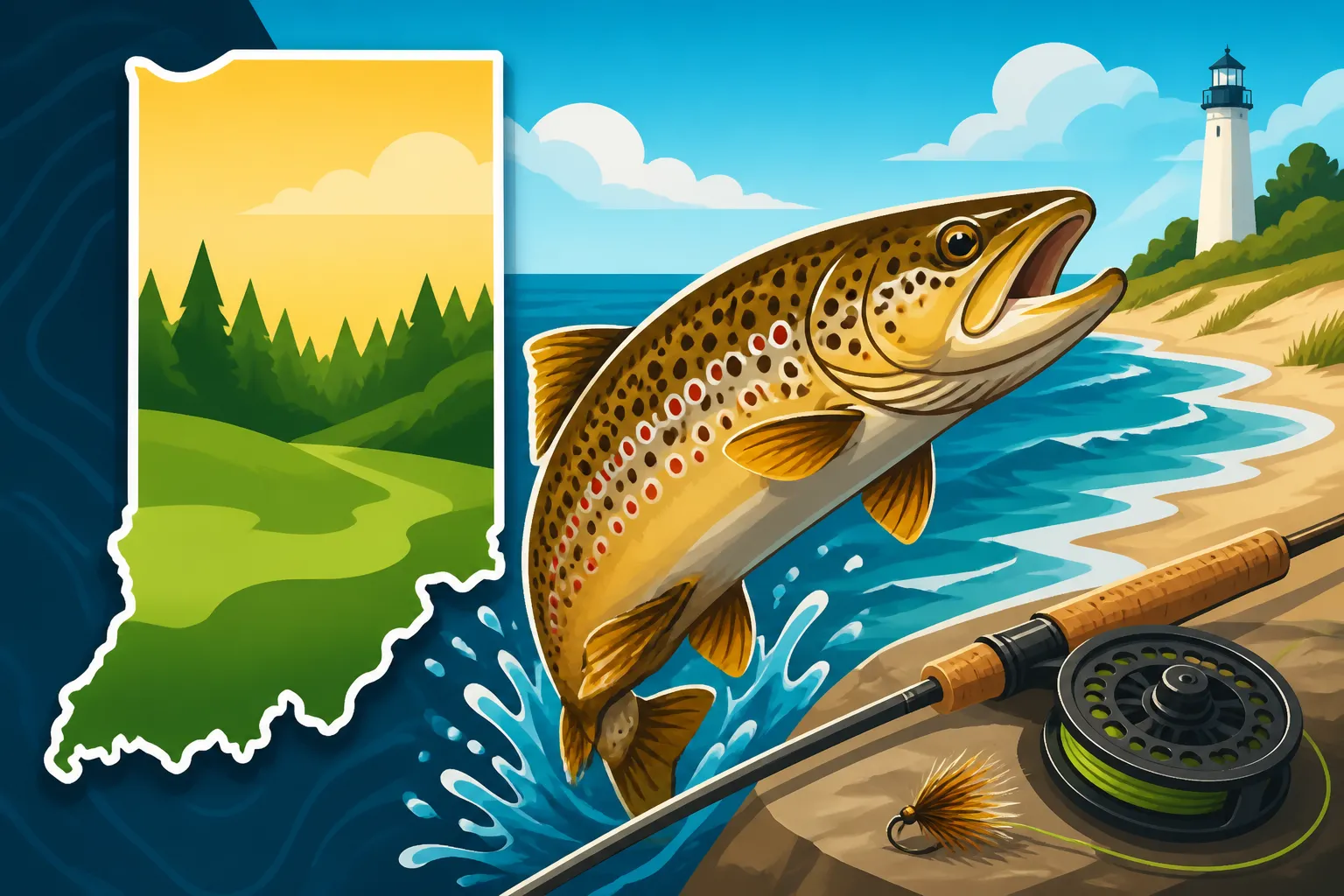
When you're out on the water, brown trout are generally easy to distinguish once you get a closer look. They typically have a beautiful olive-brown back, fading to silvery sides and a white belly. What really sets them apart are the distinct dark spots, often with a light halo, scattered across their body and fins, including the adipose fin. Some brown trout, especially the larger ones, might even show reddish-orange spots, making them incredibly striking. They usually have a squared or slightly forked tail. Knowing these features will help you confirm your catch and appreciate the beauty of this species.
These fish are temperature sensitive, preferring cooler water, generally between 50 and 65 degrees Fahrenheit. In Lake Michigan, this means they often lurk in the cooler, shallower nearshore waters in spring and fall, and will seek out deeper, cooler thermal refuges or river mouths during the warmer summer months. They are highly structure-oriented, meaning you'll often find them near submerged rocks, breakwalls, drop-offs, and around the mouths of rivers where they can ambush prey. Their diet primarily consists of baitfish like alewives and smelt, but they aren't above chasing a tasty insect or even smaller fish.
When to Target Brown Trout in Indiana
Timing your trip is crucial for brown trout success. While brown trout can be caught year-round in Lake Michigan, certain seasons offer significantly better opportunities along the Indiana shore. The absolute peak for brown trout fishing is typically in the spring, from March through May, and then again in the fall, from September through November. During these cooler months, brown trout move into shallower waters, making them accessible to shore anglers and those fishing from piers.
In spring, as the ice recedes and nearshore waters begin to warm slightly, brown trout become very active, feeding heavily on baitfish. They'll often be found in water depths of 5 to 25 feet, close to harbors, piers, and river mouths. Fall is another fantastic time, especially as brown trout begin to stage for spawning or feed aggressively before winter. Even through the winter, if the harbors and nearshore areas remain ice-free, you can find brown trout, particularly around warm water discharges from power plants, which create thermal oases for them. Summer can be tougher, as they push offshore into deeper, cooler water, but early mornings and late evenings can still produce fish near deep structure.
Prime Shore and Pier Fishing Spots for Brown Trout
One of the greatest joys of brown trout fishing along Indiana's Lake Michigan coast is the accessibility. You don't always need a boat to find these fish. The numerous public piers, harbors, and river mouths offer fantastic opportunities for anglers looking to cast from solid ground. These locations provide natural congregating points for baitfish, which in turn attract hungry brown trout.
Public Access Piers and Harbors
Indiana's Lake Michigan shoreline boasts several prime locations perfect for pier and harbor fishing for brown trout. The Michigan City Pier and Harbor, located at the mouth of Trail Creek, is arguably one of the most famous. The pier extends far into the lake, providing access to deeper water and acting as a natural funnel for migrating baitfish and trout. Anglers frequently have success casting spoons, crankbaits, or fishing with live bait like smelt or minnows from both the pier and within the protected harbor basin. The concrete walls and rock structures within the harbor itself offer excellent cover for trout.
Further west, the Portage Lakefront and Riverwalk provides another excellent shore fishing opportunity, particularly around the mouth of Burns Waterway. The long riverwalk allows anglers to cover a significant stretch of water, and the outflow from the Burns Waterway often holds concentrations of baitfish and, consequently, brown trout. Similarly, the Hammond Marina and its surrounding breakwalls can be productive, especially during colder months. These man-made structures provide shelter and attract prey, making them brown trout magnets. Remember to check local regulations, as some areas might have specific rules for fishing within marina boundaries or near boat channels. You can always refer to the "Lake Michigan Fishing Rules for Indiana Anglers" for detailed guidelines.
River Mouths and Tributaries
River mouths and the lower stretches of tributaries are absolute hotspots for brown trout, especially during spring and fall. These areas provide current, cooler water, and often a consistent supply of food, attracting brown trout from the main lake. Trail Creek in Michigan City is a classic example. Its confluence with Lake Michigan is a renowned spot for not only brown trout but also salmon and steelhead. During periods of heavy rain, the increased flow can draw fish upstream, but the mouth itself remains productive, particularly where the creek water meets the lake's cooler expanse.
Another key area is the mouth of the Burns Waterway in Portage. This channel carries water from inland into Lake Michigan, and the mixing of these waters creates a vibrant ecosystem. Anglers often line the banks here, casting into the deeper channels and current seams. Brown trout will stage in these areas, waiting to intercept baitfish carried by the current. When targeting these spots, consider using slightly heavier tackle to manage the current and ensure you can cast out to where the fish are holding. Effective baits often include spawn sacs, inline spinners, or small crankbaits that imitate baitfish struggling in the current.
Boat Fishing for Brown Trout in Indiana Waters
While shore and pier fishing can be incredibly productive, having access to a boat opens up a whole new world of possibilities for brown trout on Lake Michigan. A boat allows you to cover vast amounts of water, explore various depths, and target structure that is inaccessible from shore. This can be particularly advantageous when the fish move further offshore or are scattered across wider areas.
Nearshore Trolling Strategies
For boat anglers, trolling is a highly effective method for locating and catching brown trout along the Indiana shoreline. Brown trout are often found congregating along subtle break lines, points, and near temperature changes in shallower waters, typically from 10 to 40 feet deep. In spring, when water temperatures are cooler, many fish will be right up against the shore in very shallow water, sometimes as little as 5 feet deep. Trolling parallel to the shore, especially around river mouths, harbors, and areas with submerged structure, is a great strategy. Using planer boards can help you spread your lines out and cover a wider swath of water, allowing you to present multiple lures at different depths and distances from the boat.
When the water warms up in late spring and summer, brown trout will often move deeper, seeking cooler temperatures. Look for them around deeper rock piles, underwater humps, or thermal clines. Downriggers become invaluable tools here, allowing you to precisely present your lures at specific depths where the fish are holding. Pay close attention to your fish finder; you're looking for baitfish schools and arcs indicating larger fish below. Popular trolling speeds for brown trout typically range from 2.0 to 3.0 mph, but experimenting with different speeds can often trigger strikes. If you're new to this, consider checking out resources on "Trolling Gear Setup for Indiana's Lake Michigan Salmon" as many principles apply to brown trout too.
Essential Boat Gear and Safety
Successfully boat fishing for brown trout requires more than just a rod and reel. Having the right gear and prioritizing safety are paramount on a body of water as large and unpredictable as Lake Michigan. For trolling, you'll want medium-heavy rods with line counter reels spooled with monofilament or fluorocarbon. Downriggers and planer boards are almost essential for covering water and controlling depth. A good fish finder with GPS capabilities will help you locate structure, baitfish, and mark productive areas. Don't forget your net, especially a large one, as brown trout can grow quite substantial. If you're interested in larger watercraft, "Best Boats for Rough Water on Lake Michigan" offers some excellent suggestions.
Safety on Lake Michigan cannot be overstated. Always check the marine forecast before heading out, and be prepared for rapidly changing conditions. Essential safety gear includes Coast Guard-approved life jackets for everyone on board – check the "Indiana Boater Safety Gear Checklist" to ensure you have everything required. A marine radio, flares, a first-aid kit, and an anchor are also critical. If you're a beginner or visiting the area, considering a guided trip can be a fantastic way to learn the ropes and local hotspots. Services like FishingBooker can connect you with experienced Lake Michigan charter captains who specialize in brown trout, ensuring a safe and productive day on the water while you learn the best techniques and spots firsthand.
Baits, Lures, and Techniques for Indiana Brown Trout
Brown trout are opportunistic feeders, but they can also be notoriously picky. Having a diverse arsenal of baits and lures, coupled with a good understanding of various techniques, will significantly increase your chances of success along Indiana's Lake Michigan coast. What works one day might not work the next, so flexibility and observation are key.
Top Baits for Brown Trout
Natural baits are often irresistible to brown trout, especially when fished near piers, river mouths, or from a boat in shallower water. Smelt are a perennial favorite, as they are a primary food source for brown trout in Lake Michigan. Fishing live smelt under a float or on a three-way rig can be deadly. If live bait isn't available, cut bait or frozen smelt can still be effective. Minnows, especially larger shiners or suckers, are another excellent option, presented similarly. The natural scent and appearance of these baitfish are hard for a hungry brown trout to ignore.
For shore and pier anglers, spawn sacs or roe bags can be incredibly effective, particularly when fish are in a spawning mindset or during periods when other salmonids are running the rivers. The natural eggs of salmon or trout, tied into small mesh bags, mimic a natural food source and release an enticing scent trail. PowerBait or other manufactured trout baits can also have their moments, especially brightly colored or scented varieties, presented on a small hook with a slip sinker rig near the bottom.
Effective Lures and Colors
When it comes to artificial lures, a variety of options can entice brown trout. Spoons are a classic choice for both casting from shore/piers and trolling from a boat. Popular sizes range from 2 to 4 inches, and color patterns like silver/blue, silver/green, orange/gold, or perch patterns often produce. Brands like Little Cleo, Dardevle, or Doctor Spoon are well-regarded. The fluttering action of a spoon can effectively imitate a wounded baitfish.
Stickbaits and body baits, especially those designed to mimic alewives or smelt, are another excellent choice. Jointed or shallow-diving models in lengths from 3 to 6 inches are ideal. Colors can vary, but chrome with a blue or black back, firetiger, or natural perch patterns are often very productive. Brands like Rapala (original floater or Husky Jerk), Storm ThunderStick, or Smithwick Rattlin' Rogue are great options. These lures can be cast and retrieved with a twitching action or trolled behind a boat. If you're looking for specific recommendations, checking out "Best Lures for Trolling Brown Trout" could provide some valuable insights.
Techniques for Success
Beyond just choosing the right bait or lure, mastering various techniques will set you apart. For shore and pier fishing, fan casting allows you to cover a wide area, increasing your chances of finding actively feeding fish. Experiment with different retrieve speeds and pauses when using spoons or stickbaits. A slow, steady retrieve with occasional jerks can often trigger strikes. In areas with current, casting upstream and allowing your lure to drift naturally before retrieving can be very effective.
From a boat, trolling is the dominant technique. Vary your depths, speeds, and lure choices until you find what the fish are responding to. Don't be afraid to make sharp turns or "S" curves with your boat; these changes in speed and lure action can often provoke a bite. Pay attention to water temperature and clarity; brown trout prefer clearer, cooler water. Adjust your lure colors accordingly: brighter, more flashy colors for darker or deeper water, and more natural patterns for clear, shallow water. Keep an eye on the surface for signs of baitfish, diving birds, or even jumping trout. These are all indicators that you're in a productive area. Many of the techniques for catching steelhead, such as those described in "Steelhead Fishing in Indiana: A Fall Run Guide", can be adapted for brown trout due to their similar habitat and feeding patterns in nearshore Lake Michigan.
| Fishing Spot / Area | Best Season | Recommended Technique(s) | Key Attractors |
|---|---|---|---|
| Michigan City Pier/Harbor | Spring, Fall, Winter | Casting Spoons/Stickbaits, Live Bait | Creek Mouth, Pier Structure, Baitfish |
| Portage Lakefront/Riverwalk | Spring, Fall | Casting Lures, Bottom Rigs | River Mouth, Current, Baitfish |
| Hammond Marina Breakwalls | Spring, Fall, Winter | Casting Lures, Live/Cut Bait | Structure, Warm Water Discharge (winter) |
| Trail Creek Mouth | Spring, Fall | Casting Spinners, Spawn Sacs | Current, Cooler Water, Baitfish |
| Burns Waterway Mouth | Spring, Fall | Casting Crankbaits, Bottom Rigs | Current, Mixing Waters, Structure |
| Nearshore (Boat) | Spring, Fall | Trolling Spoons/Stickbaits (Planer Boards) | Break Lines, Shallow Structure, Baitfish |
| Deeper Structure (Boat) | Summer | Trolling Spoons/Stickbaits (Downriggers) | Thermal Clines, Submerged Humps |
Disclaimer
Fishing regulations can change, and it's always the angler's responsibility to stay informed. Before heading out, please consult the latest Indiana fishing regulations provided by the Indiana Department of Natural Resources (IDNR) to ensure compliance with all license requirements, bag limits, and size restrictions for brown trout and other species.