Why Bass Lake and Wolf Lake Have a Lower Walleye Limit
It can be incredibly frustrating to head out for a peaceful day of fishing, thinking you know the rules, only to discover that the regulations you memorized for one lake don't quite apply to another just down the road. This is especially true for walleye anglers in Indiana, where places like Bass Lake and Wolf Lake have their own unique, and often lower, minimum length limits compared to the statewide standard. It leaves you scratching your head, wondering why these specific spots are different. This guide is here to unravel that mystery, explaining the ecological and management reasons behind these specific walleye limits and what it means for your fishing trips.
The General Walleye Rules Across Indiana
Before we dive into the exceptions, let's get a firm grasp on the baseline. Most anglers in Indiana, especially those targeting walleye in the northern part of the state, are familiar with a standard set of regulations. These rules are put in place by the Indiana Department of Natural Resources (IDNR) to ensure healthy, sustainable fish populations for everyone to enjoy.
Standard Walleye Minimum Length North of State Road 26
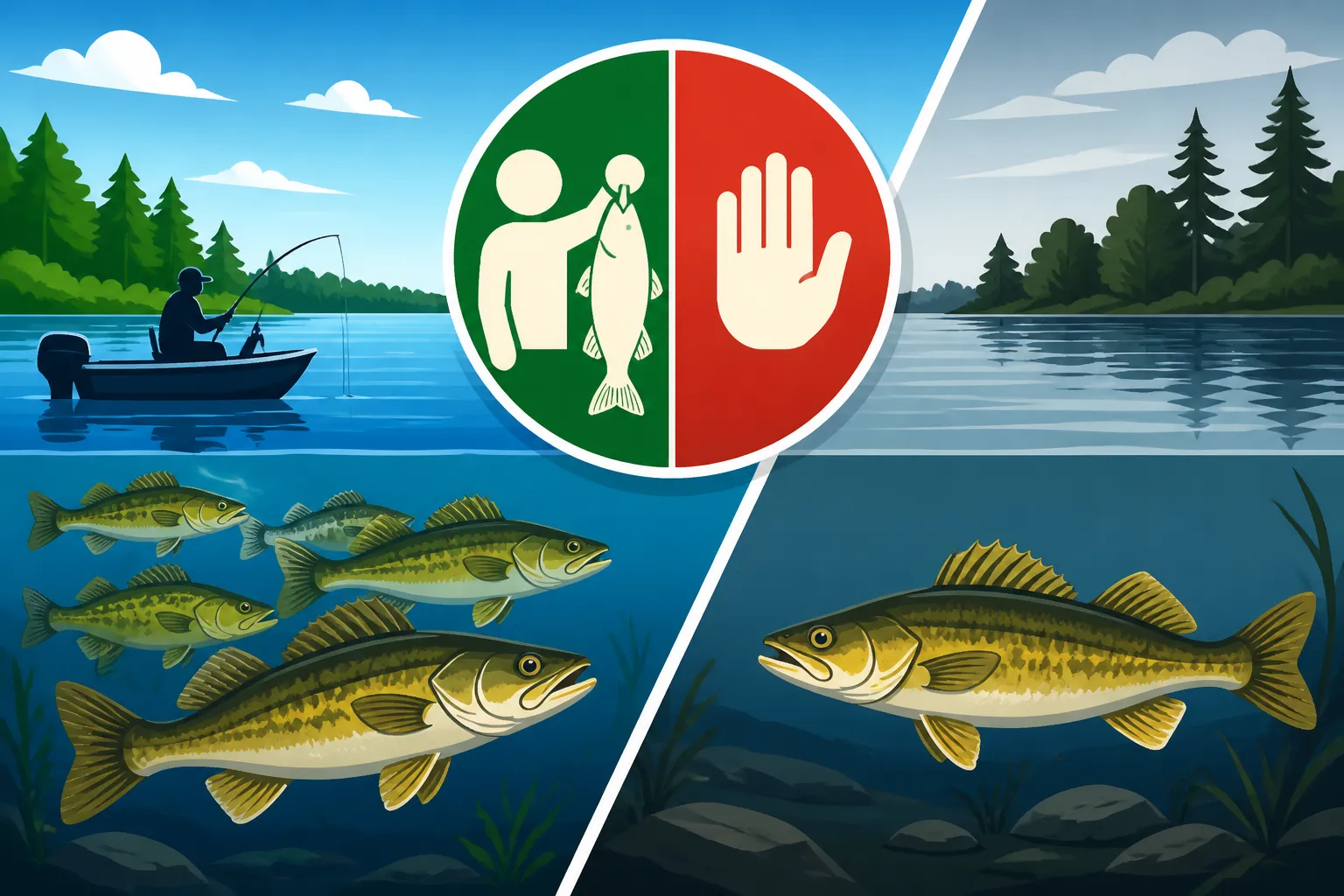
For the vast majority of Indiana's lakes and reservoirs located north of State Road 26, the walleye regulations are pretty straightforward. You're looking at a 16-inch minimum length limit for any walleye you intend to keep. This means if you reel in a beautiful walleye that measures anything less than 16 inches from the tip of its snout to the end of its tail, it needs to go right back into the water.
This 16-inch minimum length is not arbitrary. It's often chosen based on scientific data about walleye growth rates, sexual maturity, and the average size at which they begin to reproduce successfully. The goal is to allow enough fish to reach maturity and spawn at least once, contributing to the next generation of walleye before they can be harvested. This helps maintain a robust and self-sustaining fishery. Along with this, there’s typically a daily bag limit of six walleye per person, though it's always wise to double-check the current Indiana Fishing Regulations and Bag Limits Guide for any updates.
The Science Behind Walleye Management
Fisheries biologists don't just pull numbers out of a hat when setting these regulations. A tremendous amount of research goes into understanding the walleye populations in various Indiana waters. They conduct surveys, analyze catch rates, study growth patterns, and assess the success of natural reproduction or stocking efforts. For example, knowing the Walleye Minimum Length North of State Road 26 helps biologists manage the pressure on younger fish, allowing them to grow into larger, more desirable sizes and to spawn.
These studies help the IDNR tailor regulations to specific bodies of water. The overall aim is conservation and ensuring that angling opportunities remain excellent for years to come. Sometimes, a lake might have a fantastic forage base, allowing walleye to grow quickly. In other situations, environmental factors or predator-prey dynamics might slow growth. Understanding these nuances is critical to setting effective rules. It's not just about protecting big fish; it's about safeguarding the entire ecosystem that supports the walleye fishery.
Bass Lake and Wolf Lake: Unique Walleye Rules Explained
Now, let's get to the heart of the matter – why Bass Lake and Wolf Lake operate under different walleye regulations, particularly a lower minimum length, compared to much of the rest of northern Indiana. This can certainly be confusing if you're used to the standard 16-inch rule.
Bass Lake's Specific Walleye Length Limit
For Bass Lake, a beautiful body of water nestled in Starke County, Indiana, the minimum length limit for walleye is set at 14 inches. This is a noticeable difference from the standard 16 inches you'd find in many other lakes. Not only is the minimum length lower, but the daily bag limit is also reduced to two walleye per angler. This means that if you're fishing Bass Lake, any walleye under 14 inches must be released, and you can only keep two fish that meet or exceed that length.
This specific rule for Bass Lake isn't an oversight or a mistake; it's a deliberate management decision. Bass Lake is a rather unique fishery in Indiana, and its walleye population dynamics differ from larger, more robust walleye waters. Factors such as the lake's overall productivity, the success of past stocking efforts, and the specific growth rates of walleye in this particular environment all play a role. The IDNR determined that a 14-inch minimum length, combined with a reduced bag limit, better suits the goals for this lake, aiming to provide a reasonable harvest opportunity while still protecting the overall health of its walleye population.
Wolf Lake's Special Walleye Regulations
Wolf Lake, which straddles the border between Indiana and Illinois in Lake County, also has its own distinct walleye regulations, mirroring those of Bass Lake in the Indiana portion. Here, too, the minimum length limit for walleye is 14 inches, with a daily bag limit of two fish. This is another one of the " Walleye Length Exceptions at Bass Lake, Wolf Lake, and Lake George" that anglers often encounter.
Wolf Lake presents its own set of challenges and opportunities for fisheries management. As a border water, regulations can sometimes involve coordination between states, though Indiana's IDNR still sets the rules for its side. The urban setting, combined with the lake's unique hydrological characteristics and past environmental conditions, means that the walleye population behaves differently than in a more natural, expansive lake. The 14-inch minimum and two-fish bag limit reflect an adaptive management strategy designed to sustain the walleye fishery in this specific, often high-pressure environment. It allows for some harvest while attempting to prevent overfishing of the available stock.
The Ecological and Management Reasons Behind These Exceptions
So, why exactly do these two lakes get different treatment? It boils down to a blend of ecological factors and specific fisheries management goals for each body of water.
One of the primary reasons often relates to stocking programs. The IDNR regularly stocks walleye into various lakes across the state to supplement natural reproduction or to establish new fisheries where conditions are suitable. Sometimes, the walleye strains used for stocking, or the environmental conditions in a particular lake, might result in fish that mature and reproduce at a slightly smaller size than the statewide average. If walleye in Bass Lake or Wolf Lake are genetically predisposed to a slower growth rate, or if the available forage results in smaller average sizes, a lower minimum length allows anglers to harvest fish that have already contributed to the population, rather than waiting for them to reach an "unrealistic" 16 inches that might not be common for that specific fishery.
Another critical factor is the carrying capacity and productivity of the lake. Not all lakes are created equal in terms of how many fish they can support or how quickly those fish can grow. Bass Lake, for instance, has a different ecosystem compared to a larger reservoir like Monroe Lake. If the available food sources or habitat limit the maximum size walleye can attain, or if the lake is prone to environmental stressors, adjusting the regulations can help maintain a balanced population. Harvesting a greater number of smaller, yet mature, fish might be a more sustainable approach than aiming for fewer, larger fish if the lake cannot consistently produce them.
Angler pressure and harvest rates also play a significant role. These lakes might experience different levels of fishing pressure. By adjusting the limits, the IDNR can spread out the harvest, ensuring that the fishery isn't depleted by too many anglers taking too many fish, especially if natural reproduction is not as strong. The goal is to provide a sustainable angling experience.
Finally, in the case of Wolf Lake, its unique border water status and proximity to a dense population center mean that management strategies must consider these aspects. The regulations aim to provide angling opportunities for a high volume of recreational users while still protecting the fish population. It's a delicate balance to strike between recreational use and conservation.
Here's a quick comparison of the statewide versus specific lake walleye regulations:
| Regulation Type | Statewide (North of SR 26) | Bass Lake | Wolf Lake |
|---|---|---|---|
| Minimum Length Limit | 16 inches | 14 inches | 14 inches |
| Daily Bag Limit | 6 fish | 2 fish | 2 fish |
| Primary Management Goal | Promote larger, reproducing fish | Optimize harvest for unique population | Optimize harvest for unique population/pressure |
Adapting Your Walleye Fishing Strategy
Understanding these specific rules is one thing; putting that knowledge into practice on the water is another. These different regulations mean you might need to adjust your approach when targeting walleye in Bass Lake or Wolf Lake compared to other Indiana waters.
Adjusting Your Gear and Techniques
When you're heading to a lake with a lower minimum length, like Bass Lake or Wolf Lake, you might encounter a higher proportion of smaller, younger walleye. This doesn't necessarily mean you'll only catch small fish, but it does influence the overall population structure.
Consider your lure size: While large baits can still attract trophy walleye, sometimes scaling down your presentation slightly can be more effective for the prevalent size class in a particular lake. For instance, if you usually throw large crankbaits on bigger reservoirs, you might try slightly smaller versions or switch to jigs with a bit less bulk when fishing these specific lakes. Brands like Rapala or Berkley offer a wide array of sizes for popular walleye lures that you can easily find on Amazon.
Also, think about your fishing techniques. While Walleye Trolling Techniques are effective in many places, jigging or casting smaller baits might be more productive in certain areas of Bass Lake or Wolf Lake, especially if targeting fish in shallower areas or around specific structures. The key is to be adaptable and observant.
The Importance of Careful Handling
With a lower minimum length, you're likely to catch more walleye that fall below the 14-inch mark. This makes proper catch-and-release techniques absolutely vital. Walleye are relatively hardy, but mishandling can significantly increase their mortality rate, even if they swim away.
Always use a knotless, rubberized landing net to protect their slime coat and fins. Avoid handling them by the gills or eyes. If you can, keep the fish in the water while you remove the hook. Barbless hooks can make release much quicker and less damaging. If you must bring the fish into the boat for a quick measurement, do so with wet hands and support its entire body. Have your measuring board ready so you can quickly determine if it's a keeper and get it back in the water without undue stress. Remember, every fish you release carefully contributes to the future of the fishery, and that's something we all want to protect for a long time to come.
Staying Informed About Indiana Fishing Regulations
The world of fishing regulations isn't static. Rules can change from year to year, or even within a season, based on new biological data, environmental shifts, or evolving management goals. As responsible anglers, it's our duty to stay on top of these changes.
Utilizing Official IDNR Resources
The Indiana Department of Natural Resources (IDNR) is your absolute best source for the most accurate and up-to-date fishing regulations. They publish a comprehensive fishing guide annually, which you can often pick up for free at bait shops, sporting goods stores, or IDNR offices. This guide includes all the specific rules for different species and bodies of water, including those for Bass Lake and Wolf Lake.
Beyond the printed guide, the IDNR's website is a treasure trove of information. You can often find specific details about Indiana Walleye Length Limits by Lake, along with other species regulations, stocking reports, and public access information. Before any fishing trip, especially to a new or less-familiar lake, a quick check of the IDNR website can save you a lot of headache and ensure you're compliant. This is also where you'd go if you need to Buying a Fishing License Online in Indiana or look into Indiana Resident Annual Fishing License Cost options.
Why Regulations Change and Your Role as an Angler
Regulations aren't set in stone because fish populations and ecosystems are dynamic. A particularly successful spawning year, an increase in angler pressure, changes in water quality, or even the introduction of an invasive species could all prompt the IDNR to re-evaluate existing rules. The specific regulations for Bass Lake and Wolf Lake are prime examples of this adaptive management. They are tailored responses to the unique characteristics and challenges of those particular fisheries.
As an angler, your role extends beyond simply following the rules. By providing feedback to the IDNR (through surveys or public meetings), practicing ethical catch-and-release, and accurately reporting your catches (where applicable), you contribute valuable data that helps biologists make informed decisions. Think of it as a partnership: the IDNR manages the resource, and we, as anglers, help protect it for future generations. It’s also important to remember that fishing without a valid license or ignoring regulations can lead to serious Penalties and Fines for Fishing Without a License, so always err on the side of caution and be fully informed.
Disclaimer
The information provided in this guide is for general informational purposes only and is subject to change. Always consult the most current Indiana Department of Natural Resources (IDNR) fishing regulations before engaging in any fishing activities. Compliance with all applicable laws and regulations is the responsibility of the angler.