Wabash River Smallmouth Bass Fishing Spots
Oh, the mighty Wabash River! If you're an angler in Indiana, you know this iconic waterway holds a special place in our hearts. But finding those elusive smallmouth bass, especially in a river this big, can feel like trying to find a needle in a haystack. It's not just about showing up; it's about understanding the river's rhythm, knowing where these bronze beauties hide, and having the right approach. This guide is all about peeling back the layers of the Wabash to reveal the prime smallmouth bass fishing spots and the strategies that will help you land them.
The Unique Challenge of Smallmouth Bass in the Wabash River
Fishing for smallmouth bass in a river like the Wabash isn't quite like targeting largemouth in a placid lake or pond. River smallmouth are lean, mean, fighting machines, perfectly adapted to currents and structure. They're opportunistic predators, always on the lookout for a meal, but they're also masters of camouflage and using the river to their advantage. The Wabash, with its diverse flow rates, depths, and bottom compositions, offers a dynamic environment that constantly challenges anglers. You might spend hours casting, wondering if you're even in the right zip code, only to stumble upon a honey hole that proves incredibly productive. That's the beauty and the frustration of it all, isn't it?
Understanding Smallmouth Habitat in Flowing Water
Smallmouth bass thrive in areas with moving water, preferring clean, oxygen-rich conditions. Unlike largemouth that often hug dense weeds, smallmouth in rivers are all about hard structure. Think rocks, boulders, gravel beds, and downed timber. These features break the current, creating eddies and slack water where smallmouth can rest without expending too much energy, while also providing ambush points for prey.
Imagine a stretch of the Wabash where the river narrows, increasing the current speed. As that fast water hits a large boulder or a cluster of submerged logs, it creates a calmer pocket downstream. That's exactly where a smallmouth will be waiting, ready to dart out and grab a passing crawfish or baitfish. They also love areas with a mix of shallow riffles and deeper pools, moving between them depending on water temperature, sunlight, and food availability. Learning to "read the water" – identifying these current breaks and structural elements – is the first step to unlocking consistent smallmouth success.
Why Current and Structure Are Key
The current is both a friend and foe to river smallmouth. While it brings food to them, it also requires energy to fight. So, they instinctively seek out places where the current is lessened, but still present enough to deliver prey. This is where structure becomes vital.
Consider a scene on the Wabash: a strong current flowing over a rocky bottom, then suddenly hitting a stretch of large, broken concrete or natural rock ledges. Smallmouth will position themselves just out of the main flow, in front of, behind, or to the side of these structures. They'll use the structure as a shield, conserving energy, but remaining vigilant. Similarly, an undercut bank where the current has carved out a cave-like recess provides excellent overhead cover and a current break. When you're drifting your boat or wading, pay close attention to any visible or imagined changes in the riverbed or bank line – that's where the smallmouth action usually is.
Prime Wabash River Smallmouth Zones
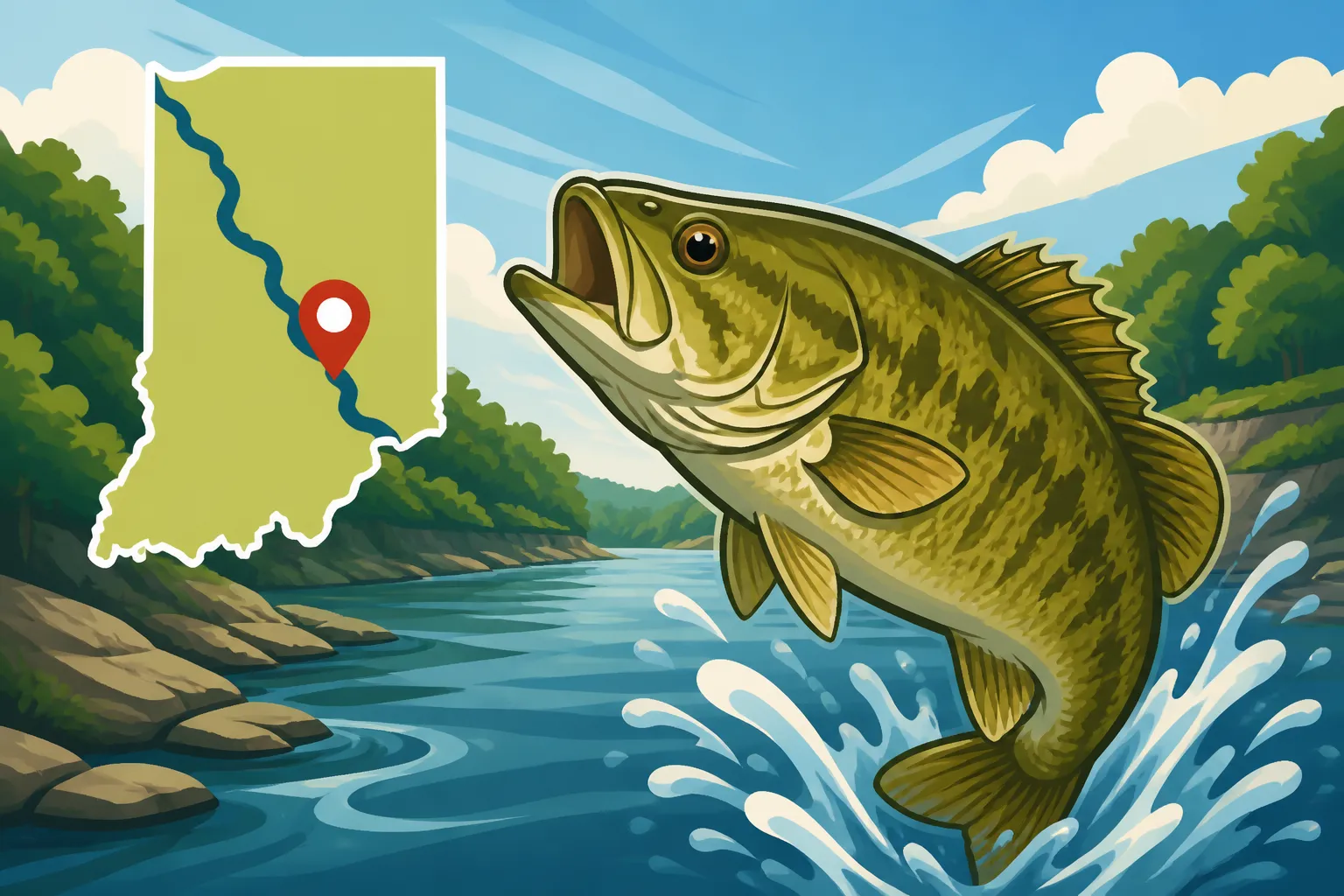
The Wabash River stretches across much of Indiana, offering countless miles of fishing opportunities. But certain sections are consistently better for smallmouth bass due to their geology, flow, and public access. Targeting these specific zones can significantly increase your chances of finding a good bite.
The Lafayette to Attica Stretch
This section of the Wabash, roughly from Lafayette downstream towards Attica and Covington, is widely regarded as one of the best for smallmouth bass. Why? It's characterized by a robust mix of gravel runs, rocky riffles, and deeper pools, often interspersed with significant log jams and undercut banks. The river here maintains a good current, but it's not overly powerful, making it very wadeable in many spots during lower water periods, and excellent for floating in a kayak or small jon boat.
You'll find numerous public access points, including state boat ramps and local parks, which are detailed in guides like our "Best Fishing Access Points on the Wabash River in Indiana". The diverse bottom structure, carved out over millennia, creates an ideal environment for crayfish and baitfish, which are the primary food sources for smallmouth. Anglers frequently report success throwing small crankbaits that mimic crawfish, or soft plastic creature baits fished along the bottom. This area is also popular among those looking to hire a guide, and many experienced guides list their trips on platforms like FishingBooker, specializing in these productive stretches.
The Terre Haute and Southern Reaches
As the Wabash River flows south past Terre Haute and further towards its confluence with the Ohio River, its character changes. It generally becomes wider, deeper, and slower, with more muddy or silty bottoms in some areas. However, don't let that deter you! There are still fantastic smallmouth opportunities, especially where tributaries enter, bringing in cleaner water and different types of structure. The key here is to seek out areas that defy the broader river characteristics.
Look for bridges, rip-rap along railroad tracks, and natural rock formations that create current breaks. These structures become even more critical in wider, slower sections where natural rock and gravel might be less prevalent. During periods of lower water, sandbars and exposed gravel beds can concentrate baitfish and, consequently, smallmouth. This section can be excellent for those with larger boats, but it also has numerous areas accessible for bank fishing or kayak launches. Fishing around the mouths of creeks like Big Raccoon Creek or other smaller inflows can be particularly productive after rains, as these areas often flush out forage and attract hungry smallmouth.
Essential Tactics for Wabash River Smallmouth Bass
Once you've identified a promising spot, the next step is to present your lure in a way that entices these wary river predators. Smallmouth bass are incredibly sensitive to presentation, and matching the hatch, so to speak, is crucial. Whether you're a seasoned pro or just starting your journey into "Bass Fishing Techniques for Beginners", mastering a few key tactics will make all the difference.
Light Tackle and Current Presentation
For most Wabash River smallmouth fishing, especially when wading or using lighter lures, a medium-light to medium action spinning rod, paired with a 2500-sized reel spooled with 6-8 pound fluorocarbon or braided line with a fluorocarbon leader, is ideal. This setup allows for accurate casts, good feel, and enough backbone to handle a feisty smallmouth in current.
When it comes to presentation, think natural. Smallmouth bass are used to seeing food drift by in the current. Your goal is to mimic that.
- Jigs: Small hair jigs, tube jigs, or Ned Rigs (rigged with a Z-Man Finesse TRD, for example) are dynamite. Cast upstream of your target structure and let the current carry your jig naturally towards it. Maintain a semi-slack line, just enough to feel subtle taps, and be ready for a strike as the lure tumbles over rocks or settles into an eddy. This is very different from the power fishing you might do for largemouth.
- Crankbaits: Shallow-diving crankbaits that imitate crawfish or minnows are incredibly effective. Cast them upstream or slightly cross-stream and retrieve them just fast enough to get them wobbling, letting the current do some of the work. Allow them to occasionally bounce off rocks – that erratic deflection often triggers a strike. Brands like Rapala or Strike King offer excellent small crankbaits in natural colors.
- Soft Plastics: Wacky-rigged worms or small senkos can also be incredibly effective, especially in slower pools or around submerged timber. The subtle wobble of a wacky rig as it sinks slowly can be irresistible to a watchful smallmouth. Again, let the current work its magic, giving the lure a natural, unforced presentation.
Topwater and Jerkbait Strategies
While bottom-contact baits are often the bread and butter for river smallmouth, don't underestimate the thrill of a topwater strike or the effectiveness of a jerkbait. These techniques shine under specific conditions and can draw aggressive bites.
- Topwater Lures: Early mornings, late evenings, or overcast days, particularly in late spring and summer, are prime times for topwater. Small poppers, walking baits (like a Heddon Super Spook Jr.), or prop baits can trigger explosive strikes. Focus your casts on areas with slower current adjacent to faster water, around log jams, or near shoreline cover. The key is to work them with subtle twitches and pauses, letting the ripples dissipate before the next movement. The sound and commotion often bring smallmouth up from deeper ambush points. Many anglers, including myself, find that booking a morning trip with a local guide through FishingBooker during these peak topwater windows can be incredibly rewarding.
- Jerkbaits: When the water is a bit clearer or smallmouth are suspended, jerkbaits can be deadly. These lures mimic injured baitfish and work well with a "twitch, twitch, pause" retrieve. The pause is critical – often, a smallmouth will strike as the lure is suspended motionless in the water column. Experiment with different pause lengths; sometimes a longer pause is what it takes. They are particularly effective around drop-offs, current seams, and submerged rock piles. For specific advice on what lures work best during different seasons, check out our guide on "Best Lure Choices for Summer Fishing".
Table of Wabash River Smallmouth Hotspots and Structure
To help you visualize where to focus your efforts, here's a quick rundown of common hotspots and the types of structure you should be looking for.
| Wabash River Section | Primary Access Points (Examples) | Key Structure to Target | Recommended Techniques | Best Conditions |
|---|---|---|---|---|
| Lafayette to Attica | Fort Quiatenon, Davis Ferry, Blackrock | Rocky riffles, deep pools, gravel bars, log jams | Jigs (tube, hair, Ned), small crankbaits, soft plastics | Moderate flow, clear to stained water |
| Attica to Covington | Portland Arch, Covington Ramp | Undercut banks, boulders, current seams, wood cover | Crankbaits, jigs, spinnerbaits, topwater (seasonal) | Stable water levels, good clarity |
| Terre Haute Area | Fairbanks Park, Wabashiki FWA | Bridge pilings, rip-rap, tributary mouths, deeper holes | Jigs, large crankbaits, spinnerbaits, live bait | Higher water, current breaks, varied depths |
| Southern Reaches | Vincennes, New Harmony | Sandbars, exposed rock, creek mouths, submerged timber | Deep-diving crankbaits, heavy jigs, live bait, large soft plastics | Slower current, warmer water |
This table is just a starting point, of course! The Wabash is vast, and every bend can hold a surprise. Local knowledge is invaluable, so don't hesitate to chat with folks at bait shops or even local angling groups. Sometimes, booking a half-day trip with a local guide found on FishingBooker is the fastest way to learn the specific nuances of a particular stretch.
Seasonal Considerations for Wabash Smallmouth
Just like any other fish, smallmouth bass behavior in the Wabash River is heavily influenced by the seasons. Understanding these patterns will help you choose the right spots and techniques throughout the year.
Spring Aggression and Post-Spawn Recovery
As the water temperatures rise in spring, smallmouth become more active and start moving into shallower, rocky areas to feed aggressively before the spawn. This is a fantastic time for crankbaits, spinnerbaits, and even some faster-moving jigs. They're looking to bulk up, so presentation can be a bit more aggressive. The "Best Time of Year to Catch Bass" often points to this pre-spawn period.
After they spawn (typically when water temperatures are in the mid-60s Fahrenheit), smallmouth will often move to slightly deeper water near their spawning areas to recover. They can be a bit lethargic immediately post-spawn, so slower presentations with tube jigs or soft plastics can be effective. As they regain energy, they'll resume their aggressive feeding patterns. Pay attention to water levels during spring; heavy rains can blow out the river, making fishing difficult, but as the water drops and clears, the fishing can be exceptional.
Summer Stability and Low Water Challenges
Summer on the Wabash often brings more stable weather and lower water levels. While this can make wading and kayak fishing easier, it can also concentrate smallmouth in deeper pools, current seams, and under heavy cover where cooler, oxygenated water is present. Topwater fishing is often at its peak during the low light hours, but during the bright midday sun, you'll want to target those deeper current breaks with jigs, Ned Rigs, or even small drop shot rigs.
When water levels are low, gravel bars become more pronounced, and the main current channels are easier to identify. This is a great time to float a section of the river, thoroughly working every pocket and eddy. Pay special attention to shade lines created by trees or bridges, as smallmouth will use these areas to escape the sun. Fishing during the cooler parts of the day, such as early morning or late evening, is often most productive in summer.
Fall Feeding Frenzy
Fall is another prime time for smallmouth bass in the Wabash. As water temperatures begin to cool, smallmouth sense the approaching winter and go on a feeding binge. They'll be actively chasing baitfish, and you can often find them concentrated in predictable areas. Crankbaits, spinnerbaits, and jerkbaits become incredibly effective again, as smallmouth are willing to chase lures aggressively.
Look for them around rocky points, current seams, and areas where baitfish are abundant. The cooler water also means they might be more willing to move into shallower water throughout the day, not just during low light. As the leaves change and the air turns crisp, the "Fishing the Wabash River in Indiana" can offer some of the most memorable smallmouth action of the year, with fish that are plump and ready for a fight.
Winter Sluggishness
Once water temperatures plummet, smallmouth bass become much less active. They'll seek out the deepest, slowest pools in the river, often congregating in large schools. Fishing becomes much more challenging and requires slow, deliberate presentations. Jigs, especially blade baits or vertical jigging spoons, fished directly over these deep wintering holes can sometimes coax a bite. However, winter smallmouth fishing on the Wabash is typically reserved for the most dedicated (and patient!) anglers.
Understanding these seasonal shifts and adapting your approach accordingly will not only lead to more successful trips but will also deepen your appreciation for the Wabash River and its incredible smallmouth population.
Disclaimer
Fishing regulations can change, and it's always your responsibility to check the latest rules and licensing requirements from the Indiana Department of Natural Resources (DNR) before heading out. Make sure you have the correct Indiana fishing license, and be aware of any specific length or bag limits for smallmouth bass on the Wabash River. Practice catch and release, especially for larger breeding fish, to help preserve this fantastic fishery for future generations.