Indiana’s Largemouth and Smallmouth Bass Daily Limit: 5 Fish Combined
One of the most common head-scratchers for anglers hitting Indiana's waters is figuring out the daily limit for bass, especially when you're targeting both largemouth and smallmouth. It's easy to get confused, wondering if the limits are separate or combined, and what that actually means for your cooler. This guide is here to clear up that confusion, diving deep into Indiana's bass regulations so you can fish confidently and stay on the right side of the law.
Understanding Indiana's Combined Bass Limit
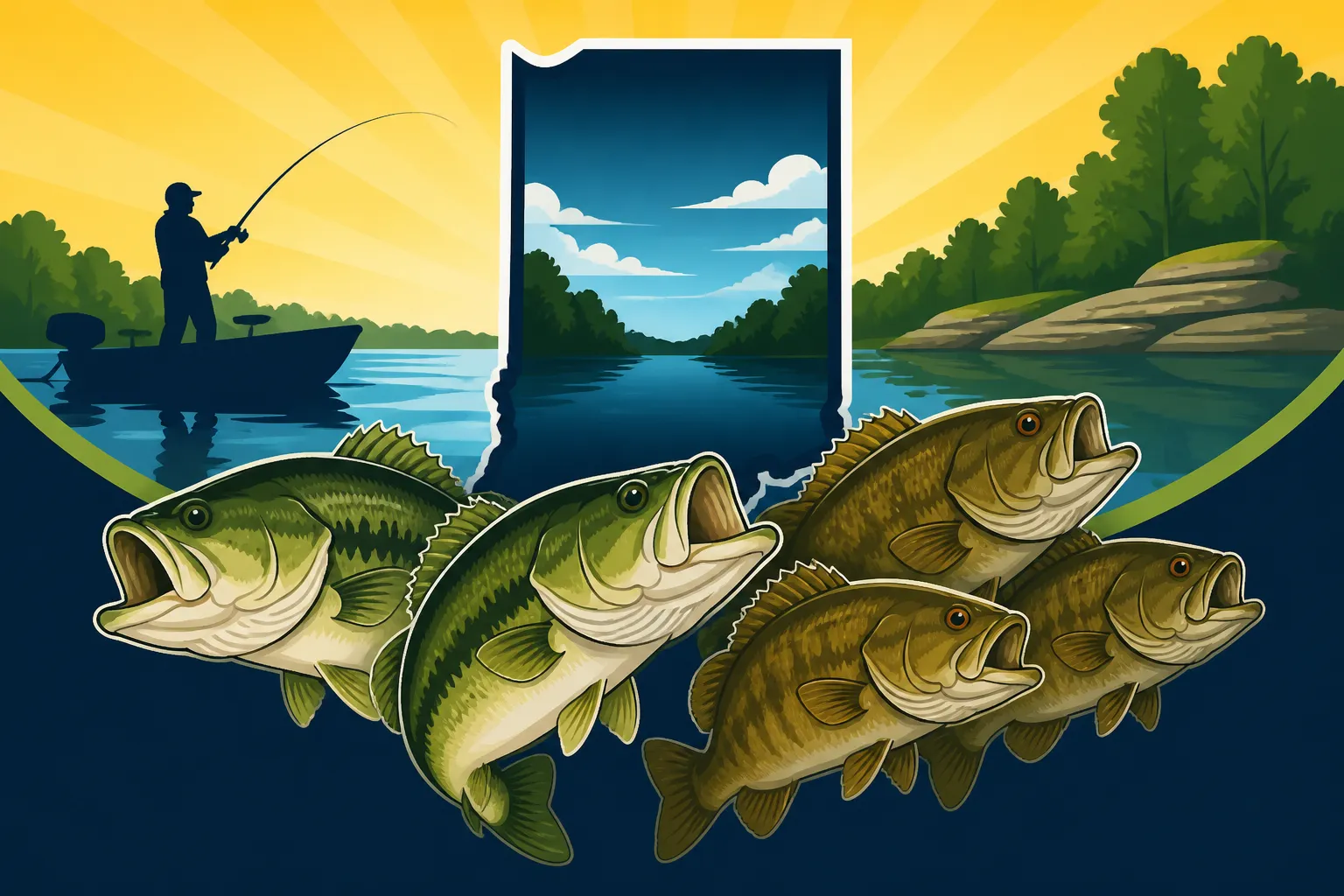
It's a common scenario: you're out on a beautiful Indiana lake, casting for largemouth near a weed bed, and then decide to hit a rocky point for smallmouth. You start catching a few of each, and suddenly, you're doing mental math trying to figure out how many more you can keep. The key thing to remember in Indiana is that the daily bag limit for largemouth and smallmouth bass is combined. This means you can't take five of each; your total catch of these two species, regardless of their individual type, cannot exceed the specified number.
Why a Combined Limit Exists for Bass
The Indiana Department of Natural Resources (DNR) implements combined limits for several very good reasons, primarily focused on conservation and simplifying regulations. From a biological standpoint, largemouth and smallmouth bass often coexist in the same water bodies, or at least in adjacent habitats. While they have different preferences – largemouth favoring warmer, weedy shallows and smallmouth preferring cooler, rocky, clearer water – there's enough overlap in many Indiana lakes and rivers that managing them separately could lead to overharvesting of one species or create unnecessary complexity for anglers and enforcement.
Think about it from a management perspective: if the limits were separate, say five largemouth and five smallmouth, it would be much harder for conservation officers to enforce. An angler could claim they caught all largemouth or all smallmouth, making it difficult to prove a violation without genetic testing on every fish in the livewell. A combined limit streamlines enforcement and ensures that the overall bass population remains healthy by controlling the total number of fish removed from the ecosystem. It's a pragmatic approach to protecting our valuable sport fish while still allowing for reasonable harvest.
What "Combined" Truly Means
Let's break down the "combined" aspect with some clear examples, because this is where many anglers get tripped up. When Indiana regulations state that the daily bag limit for largemouth and smallmouth bass is 5 fish combined, it means your total creel for a single day, or what you possess on the water, cannot exceed five fish made up of any combination of these two species.
Imagine you're fishing on Lake Monroe, a fantastic spot for both species. You start your morning and catch three beautiful largemouth bass. Later in the afternoon, you move to a different area and land two feisty smallmouth bass. At this point, your combined total is five bass (three largemouth + two smallmouth). You have reached your daily limit. Even if you haven't caught five largemouth, and you haven't caught five smallmouth, you cannot keep any more bass of either species for the day. This rule is straightforward: count all your largemouth, count all your smallmouth, add them together, and that sum cannot be more than five. This is crucial for understanding Indiana's Statewide Bass Daily Bag Limit.
The Statewide Rule for Most Waters
For the vast majority of Indiana's lakes, rivers, and streams, the statewide daily bag limit for largemouth and smallmouth bass is five fish, combined. This is a crucial piece of information that every angler should commit to memory before heading out. This rule applies to popular fishing destinations like Patoka Lake, Monroe Lake, and the vast network of smaller public and private ponds across the state.
It's not just about the number of fish, though; minimum size limits also play a significant role. For largemouth and smallmouth bass, the statewide minimum size limit is 14 inches. This means any bass you keep must be at least 14 inches long from the tip of its snout to the end of its tail, and it counts towards your five-fish combined limit. So, if you catch a 12-inch largemouth, it must be immediately released, and it doesn't count towards your daily bag. This dual regulation (size and quantity) helps protect younger fish and ensures that more bass have a chance to grow to a mature, spawning size, benefiting the overall fishery. Always double-check the latest Indiana Fishing Regulations and Bag Limits Guide, as specific waters can have their own nuances.
Navigating Specific Bass Regulations
While the five-fish combined limit and 14-inch minimum size apply to most of Indiana's waters, it wouldn't be fishing regulations if there weren't a few exceptions or special considerations! Understanding these specific rules is vital, especially if you're venturing to unique fisheries like Lake Michigan or certain other bodies of water that have tailored management plans.
Lake Michigan Bass Limits
Lake Michigan is a world unto itself when it comes to fishing regulations, and bass are no exception. For anglers targeting bass on Indiana's portion of Lake Michigan and its tributaries, the rules are often different from the rest of the state. Currently, the daily bag limit for largemouth and smallmouth bass on Lake Michigan is also five fish combined, but the minimum size limit is often more restrictive. Specifically, on Lake Michigan and its tributaries up to the first dam, the minimum size limit for largemouth and smallmouth bass is 14 inches, just like the statewide rule. However, it's always a good idea to consult the detailed Lake Michigan Fishing Rules for Indiana Anglers, as these regulations can be subject to change based on surveys and scientific recommendations specific to the Great Lakes. The cold, clear waters of Lake Michigan present a unique habitat, and the bass populations there are managed with specific goals in mind, often focusing on trophy potential and sustainable harvest.
Special Regulations in Select Waters
Beyond the statewide and Lake Michigan rules, some individual lakes or river sections might have their own unique bass regulations. These "special regulations" are typically put in place to address specific ecological concerns, enhance a particular fishery, or correct imbalances in a fish population. For instance, a lake known for an overpopulation of stunted bass might have a higher bag limit or a slot limit (allowing harvest only of fish within a certain size range, or outside of it) to encourage growth to larger sizes. Conversely, a lake where trophy bass are being cultivated might have a more restrictive limit or a higher minimum size.
These localized rules are usually posted prominently at boat ramps and access points, but it's always the angler's responsibility to know before they go. For example, some bodies of water might have a protected slot limit, where bass between 14 and 18 inches must be released, but you can keep fish under 14 inches or over 18 inches, up to the daily bag limit. This type of regulation is designed to protect the breeding stock while allowing harvest of smaller or larger fish. The best way to be sure is to check the Indiana DNR's fishing guide, either online or by picking up a physical copy from a license vendor. These guides list all the special regulations by county and water body. When fishing any new body of water, it's prudent to check for these specific rules.
How to Check for Local Rules
Staying informed about the most current Indiana fishing regulations is paramount. Ignoring the rules, even unintentionally, can lead to fines and other penalties, which no one wants. The primary source for all official Indiana fishing regulations is the Indiana Department of Natural Resources (DNR).
Here’s how you can make sure you’re always up-to-date:
- DNR Website: The most comprehensive and current resource is the Indiana DNR website. They publish the annual Fishing Guide and provide updates throughout the year. A quick search for "Indiana fishing regulations" will lead you to the official pages where you can download the full guide or browse by species and water body. This is also where you can find specifics like the Combined Bass Limit for Indiana Lakes and Rivers.
- Printed Fishing Guide: Every year, the DNR produces a physical fishing guide. These are available for free wherever fishing licenses are sold, such as at bait shops, sporting goods stores like those found on Amazon, and some county clerk offices. It’s always a good idea to grab a copy and keep it in your tackle box or boat.
- Local Bait Shops: Local bait and tackle shop owners are often incredible resources. They live and breathe local fishing and usually know the ins and outs of specific regulations for the waters in their area. Don't hesitate to ask them before you launch your boat.
- Signage at Access Points: Many boat ramps and public fishing areas will have signs detailing specific regulations for that particular body of water. Always take a moment to read them, even if you think you know the rules.
Remember, ignorance of the law is not an excuse. Taking a few minutes to confirm the regulations can save you a lot of hassle and ensure you're contributing to sustainable fishing practices in Indiana.
Identifying Largemouth and Smallmouth Bass
Knowing the difference between a largemouth and a smallmouth bass isn't just about curiosity; it's essential for complying with regulations, especially if there were ever different size or bag limits (though currently, they share a combined limit). Even though they are both "bass," they are distinct species with different behaviors and preferred habitats. Proper identification helps you understand what you're catching and ensures you release fish that don't meet the legal requirements.
Key Features of a Largemouth Bass
The largemouth bass is probably the most iconic sport fish in Indiana, and for good reason! They're aggressive, hard-fighting, and grow to impressive sizes. Identifying a largemouth is usually quite straightforward once you know what to look for:
- Mouth Size: This is the most obvious clue, giving them their name. When the mouth is closed, the corner of the jaw (maxillary) extends well past the rear edge of the eye.
- Dorsal Fin: The dorsal fin (the one on its back) has a very distinct, deep notch, almost appearing as two separate fins connected by a thin membrane.
- Coloration: Typically, largemouth bass have a dark green to olive green back, fading to lighter green or white on their belly. They are characterized by a prominent, irregular, horizontal dark stripe or series of blotches running along their side. This stripe is often quite broken or patchy.
- Body Shape: They tend to have a deeper, more robust body shape compared to smallmouth bass.
- Habitat: You'll generally find largemouth bass in warmer, shallower, weedy areas, around submerged timber, lily pads, and docks. They thrive in lakes, ponds, and slower-moving rivers.
If you're unsure, just remember the "large mouth" rule – if the jaw goes past the eye, it's a largemouth. For a deeper dive, check out our guide on How to Identify a Largemouth Bass in Indiana Waters.
Key Features of a Smallmouth Bass
Smallmouth bass are often considered the "bronze backs" of Indiana's clearer, cooler waters. They're renowned for their acrobatic fights and can be found in different environments than their largemouth cousins.
- Mouth Size: In contrast to the largemouth, the smallmouth bass has a jaw that extends only to about the middle of the eye, or just slightly past it, when its mouth is closed. This is the easiest way to tell them apart.
- Dorsal Fin: The dorsal fin of a smallmouth bass has a much shallower notch, making it appear more continuous than the largemouth's.
- Coloration: Smallmouth bass usually have a bronze or brownish color on their sides, often with vertical bars or stripes that are less distinct than the largemouth's horizontal band. Their belly is typically white or creamy. They lack the distinct lateral line stripe.
- Eye Color: Smallmouth often have reddish eyes, which can be another subtle clue.
- Body Shape: They tend to have a more streamlined, torpedo-shaped body, which is well-suited for battling currents.
- Habitat: Smallmouth prefer cooler, clearer water with rocky bottoms, gravel, and current. You'll find them in many of Indiana's northern glacial lakes, rivers like the Tippecanoe, and of course, Lake Michigan.
For a side-by-side comparison, our article on Largemouth Bass vs Smallmouth Bass: Key Differences offers even more detail.
The Importance of Correct Identification
Correctly identifying your catch is fundamental for responsible angling. As we've discussed, both largemouth and smallmouth fall under the same combined daily limit in Indiana, but imagine if a specific lake had a unique slot limit for only one species. If you misidentified a fish, you could unknowingly keep a protected fish or release a fish you could have legally harvested.
Moreover, proper identification helps you better understand the ecosystems you're fishing. Knowing what you're catching informs your tackle choices, fishing techniques, and even your conservation efforts. For instance, if you're consistently catching smallmouth in a river, you might focus on smallmouth-specific lures and presentations, like those you can find on Amazon, rather than largemouth baits. It also helps contribute to accurate creel surveys if you ever encounter DNR officials who ask about your catch. Ultimately, being able to confidently tell the difference between these two fantastic sport fish makes you a more knowledgeable and responsible angler, fully prepared for Indiana Fishing.
Here's a quick comparison table to help you out:
| Feature | Largemouth Bass | Smallmouth Bass |
|---|---|---|
| Mouth Extent | Jaw extends beyond the rear edge of the eye | Jaw extends only to mid-eye or slightly past |
| Dorsal Fin | Deep, almost separated notch | Shallow, more continuous notch |
| Coloration | Green to olive, prominent dark horizontal stripe/blotches | Bronze to brownish, faint vertical bars, no distinct stripe |
| Body Shape | Deeper, more robust body | More streamlined, torpedo-shaped body |
| Habitat | Warmer, weedy, shallow water, submerged timber | Cooler, clear, rocky water, current |
| Eye Color | Typically dark | Often reddish |
Ethical Angling and Conservation
Fishing isn't just about catching fish; it's also about being a good steward of our natural resources. Understanding and adhering to daily limits and practicing ethical angling techniques are crucial for ensuring that future generations can enjoy the same fantastic fishing opportunities we have today in Indiana. This means thinking beyond just the regulations and considering the broader impact of our actions on fish populations and their habitats.
Practicing Catch and Release Responsibly
Even if you're fishing within the legal limit, there will be times when you catch fish you don't intend to keep, either because they're undersized, or you've already met your personal quota for table fare. Practicing responsible catch and release significantly increases a fish's chances of survival.
Here are some best practices:
- Minimize Fight Time: Bring the fish in quickly to reduce exhaustion.
- Use Barbless Hooks: Crushing the barb on your hooks (many pliers have a section for this) makes removal much easier and less damaging.
- Handle Fish Gently: Avoid touching the fish's eyes or gills. Wet your hands before handling to protect their protective slime coat.
- Support the Fish: When holding a bass, support its entire body, especially if it's a larger fish. Avoid holding it solely by the jaw, which can damage its ligaments and spine, particularly for heavier fish.
- Quick Hook Removal: Use needle-nose pliers or a hook-remover tool (easily found on Amazon) to remove the hook as quickly and gently as possible. If the hook is deeply swallowed, cut the line as close to the hook as you can rather than trying to dig it out.
- Revive If Necessary: If a fish looks exhausted or isn't swimming away immediately, gently hold it upright in the water, facing into the current (if any), and move it back and forth to force water over its gills until it regains its strength and swims off on its own.
Responsible catch and release is vital for sustaining trophy fisheries and ensuring robust populations, complementing regulations like the Smallmouth Bass Daily Limit in Indiana Rivers.
The Role of Anglers in Conservation
Every angler plays a direct role in the conservation of Indiana's fish populations and aquatic ecosystems. By understanding and respecting fishing regulations, we help manage harvest levels and protect critical breeding stock. However, conservation goes beyond just bag and size limits. It also involves:
- Habitat Protection: Participating in or supporting efforts to protect and restore aquatic habitats, whether it's cleaning up litter, reporting pollution, or advocating for sound land management practices. Healthy habitats mean healthy fish.
- Preventing Invasive Species: Always clean, drain, and dry your boat, trailer, and fishing gear after each outing to prevent the spread of invasive species like zebra mussels or Eurasian watermilfoil, which can devastate native ecosystems.
- Reporting Violations: If you witness illegal fishing activity, such as exceeding the daily limit or keeping undersized fish, report it to the Indiana DNR. This isn't "snitching"; it's protecting our shared resource.
- Educating Others: Share your knowledge of responsible angling and conservation practices with fellow anglers, especially newer ones or children. Mentoring new anglers in ethical practices is one of the most impactful things you can do for the future of fishing.
By actively engaging in these practices, anglers become part of the solution, ensuring that places like Lake Wawasee continue to offer incredible fishing for years to come.
Avoiding Penalties for Over-Limits
Ignoring fishing regulations, particularly daily bag limits, can lead to serious consequences. The Indiana DNR and conservation officers are dedicated to protecting the state's natural resources, and they take violations seriously.
- Fines: The most common penalty for exceeding the daily bag limit or keeping undersized fish is a fine. The amount can vary depending on the severity of the violation, the number of fish over the limit, and whether it's a first offense or a repeat offense. These fines can range from hundreds to thousands of dollars.
- Seizure of Fish and Gear: Conservation officers have the authority to seize illegally taken fish, and in some cases, your fishing gear (rods, reels, even boats) can be confiscated.
- Loss of Fishing Privileges: For serious or repeated violations, your Indiana fishing license can be suspended or revoked. This means you would be legally prohibited from fishing in Indiana for a specified period, which can be devastating for passionate anglers.
- Criminal Charges: In egregious cases, particularly those involving commercial poaching or significant over-limits, violations can escalate to criminal charges, leading to potential jail time.
It's simply not worth the risk. Always verify the current regulations before you head out, count your fish carefully, and if in doubt, practice catch and release. Understanding the rules, like those for Indiana's Statewide Bass Daily Bag Limit, is your first line of defense. Remember, officers patrol frequently, and they know the waters. If you're ever cited, understanding What Happens If You Fish Without a License in Indiana? can give you an idea of the penalties involved, though over-limit penalties can be different. Staying informed and compliant is the easiest way to ensure your fishing trips remain enjoyable and trouble-free.
Disclaimer
The information provided in this guide is intended for general informational purposes only and is subject to change. While we strive to offer accurate and up-to-date content, fishing regulations, bag limits, and other rules are established and enforced by the Indiana Department of Natural Resources (DNR) and can be updated at any time. It is always the angler's responsibility to consult the most current official Indiana Fishing Guide or the Indiana DNR website before engaging in any fishing activity. Relying solely on information from third-party sources may result in non-compliance with applicable laws and regulations.